
Skip to content

Education and youth

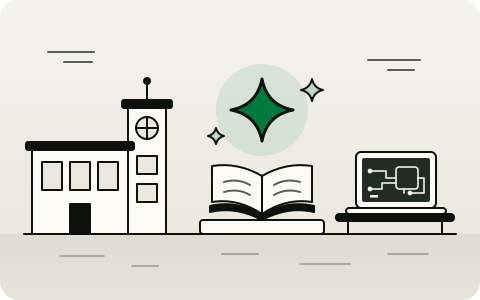
Private school, technology high school and applied education projects.

We look at investment and partnership options for places where young people can create while they learn, prepare for a profession and spend time together.

The learning path

Work topics

We treat the work topics as the stops of a path. Each stop focuses on its own question, and all of them lead to places where young people can learn and make things.

  1. A high-school model focused on artificial intelligence, software and vocational education

    We evaluate a high-school model in which lessons are organised together with workshop and project work, and students learn by doing in fields such as software and artificial intelligence. We focus on how the curriculum, the technical infrastructure and the route into a profession fit together.

    • Software
    • Artificial intelligence
    • Vocational education
  2. Private schools and higher-education investments

    For private school and higher-education investments we first examine the regional need for education and the investment conditions. Together we look at building and infrastructure options, how the institution would be run, and which partnerships could be formed.

    • Private school
    • Higher education
    • Operating model
  3. Workshop, laboratory and internship models

    We focus on the places where learning moves out of the classroom: the equipment, safety and use of workshops and laboratories, and forms of cooperation that let students do internships with local businesses.

    • Workshop
    • Laboratory
    • Internship
  4. Youth and sports projects

    We evaluate spaces where young people meet outside school, make and share things, and play sport. We look at facility and programme options, how use and operation are organised, and the link with the surrounding schools and institutions.

    • Youth
    • Sport
    • Community

Evaluation

Which questions do we look at in an education investment?

Every project is evaluated under its own conditions. During the evaluation we look at the questions below.

  • Location and access

    How students, families and staff would reach the school; the surrounding settlement and its need for education.

  • Building and infrastructure

    The suitability of classrooms, workshops and laboratories; infrastructure needs such as water, energy and internet.

  • Permits and approvals

    Which permits and approvals an education institution needs is examined in line with the competent authorities and the relevant regulations.

  • Operating model and partners

    Who would run the institution and under what structure; how management, teaching and support services would be organised; which partners could be worked with.

  • General demand and need

    Which fields of education families and young people in the region need; how supply and demand look in general terms.

  • Risks

    The risks that could affect whether the project can be carried out, and which measures could be considered against them.

How we work

Our approach

For every new project we first examine the need, the investment conditions and the operating model. Depending on the nature of the work, we meet with investors, producers and local businesses.

How does an education project proceed?

  1. Need First we try to understand the need for education in the region and the fields young people turn to.
  2. Investment conditions Location, building and infrastructure options and the permits and approvals that are needed are handled together.
  3. Operating model Who will run the institution, under what structure and with which services is clarified.
  4. Meetings Depending on the nature of the work, we meet with investors, educational institutions and local businesses.
  5. Joint evaluation The project options are evaluated together with the information gathered; the next step is set according to that evaluation.

Education is not a field that stands alone. The links it has with our other fields of activity help us think about a project more as a whole.

Frequently asked questions

Which education projects do you work on?

We work on private school, technology high school and applied education projects; higher-education investments; workshop, laboratory and internship models; and youth and sports projects. Each project is evaluated separately under its own conditions.

How do you evaluate a project?

First we examine the need, the investment conditions and the operating model. We look together at topics such as location, building and infrastructure, permits and approvals, partners and risks. Depending on the nature of the work, we meet with investors, producers and local businesses.

Can we also talk about an existing building or institution?

You can. Whether we take a project up through an existing building or institution, or as a new investment, is evaluated together according to the need and the conditions.

What is useful to share when getting in touch?

You can share the location of the project, its scope and the partnership model you are looking for. For education projects, it also makes the evaluation easier if you write the student group you have in mind and the field of education you are considering.

What happens after the first meeting?

The first meeting is for talking through the project and the cooperation options together. The next step is decided once the need, the investment conditions and the operating model have been evaluated together.

Do you have a project in education and youth?

Share the location of the project, its scope and the partnership model you are looking for, and let us evaluate it together.